If the physical water meter keeps registering flow during a true no-use period, water is passing through the metered side of the plumbing. That can indicate a leak, but it does not prove that a pipe is broken behind a wall, under the slab, or beneath the yard. A silent toilet, an irrigation valve, an automatic appliance, or another overlooked water use can create the same result.
Start by confirming that the entire property is using no water, record the meter, and compare it again after a controlled waiting period. If the reading continues to increase after toilets, irrigation, appliances, and scheduled equipment have been ruled out, professional leak isolation can help locate where the water is going before any repair is recommended.
Make Sure the Property Is Truly Using No Water
Turning off the faucets is only the first step. Many systems can draw water without someone standing at a sink or shower. Before checking the meter, make sure:
- No faucet, shower, bathtub, or hose bib is running or dripping.
- No one flushes a toilet or uses water during the test.
- The dishwasher and clothes washer are completely idle.
- The irrigation controller is not starting a scheduled or manual cycle.
- A refrigerator ice maker, water dispenser, reverse-osmosis system, water softener, or whole-house filter is not cycling.
- A pool or spa auto-fill is not adding water.
- Recent hot-water use has ended and the water heater has finished refilling.
- Contractors, cleaners, or family members are not using an outdoor faucet or another less-visible connection.
Choose a quiet time when these conditions can remain unchanged. If the household cannot avoid water use, postpone the test. Even one toilet flush or an ice-maker fill can make the result misleading.
Check the Meter Safely and Record What You See
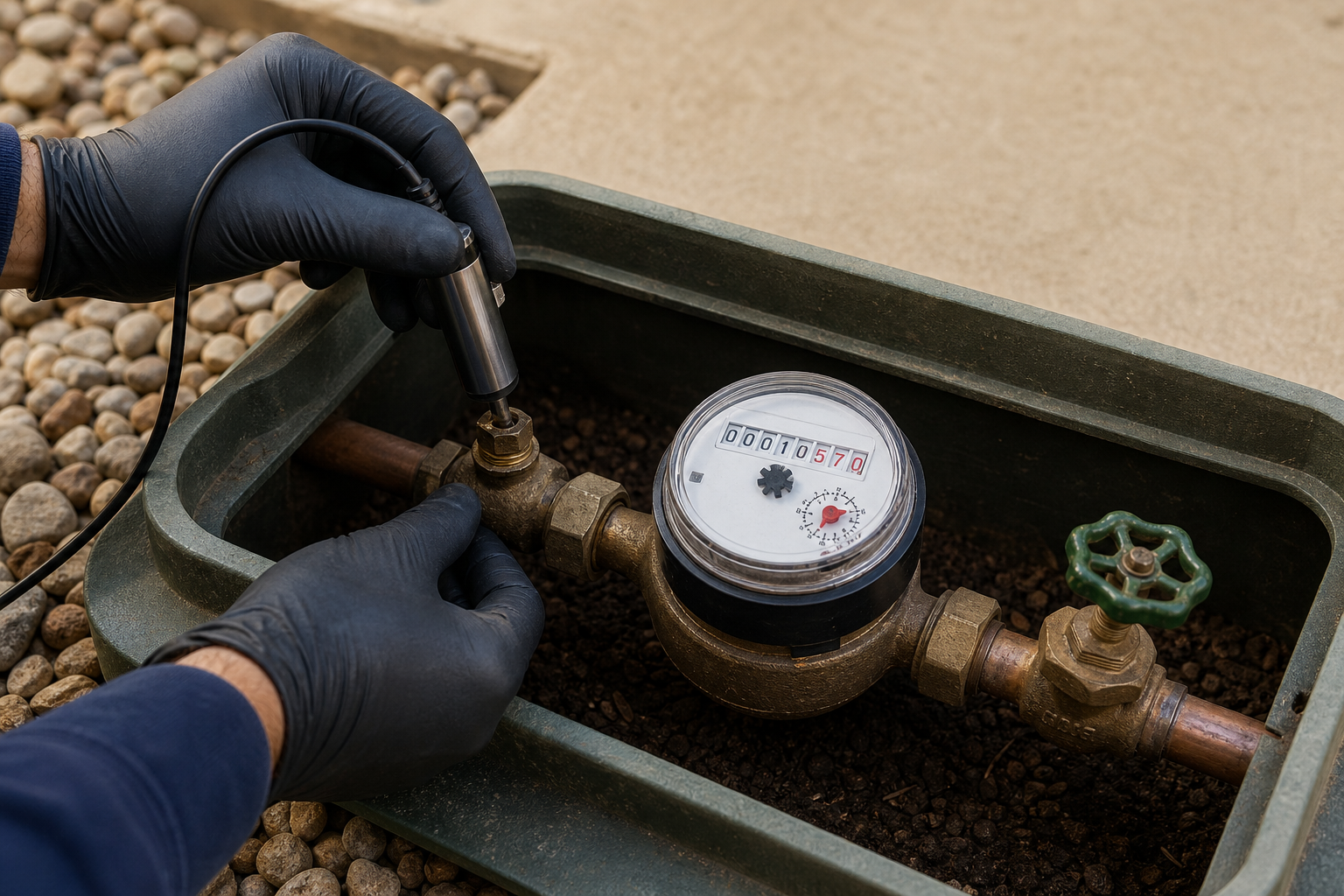
Water-meter designs differ. Some have mechanical dials or a small flow indicator. Others use a digital display that cycles through readings or symbols. A utility account or app may show interval data rather than the exact second-by-second activity visible at the physical meter, so a billing graph should not be treated as a substitute for a controlled meter check.
If the meter is safely accessible, photograph or write down the complete reading and the time. Include every displayed digit and the unit, if shown. Do not remove or alter utility seals, operate a utility-owned curb stop, or force any valve. If the lid is too heavy, the box is locked, flooded, damaged, full of insects, or close to traffic or another hazard, stop and contact the water utility.
After recording the reading, keep all water off for at least 15 to 30 minutes. A longer window, such as one to two hours, may make a slow continuous loss easier to recognize. Compare the complete reading again. If the meter has a flow indicator, note whether it remains active, but rely on the change in the recorded reading as well because indicator behavior varies by meter.
Repeat the test if anything may have used water. A second no-use test at a different time can help expose an irrigation schedule, appliance cycle, or intermittent toilet leak that distorted the first result.
What Meter Movement Can—and Cannot—Tell You
A rising physical meter reading during a confirmed no-use period is strong evidence that water crossed the meter. It does not identify the destination. The water could be escaping from a toilet, irrigation system, appliance connection, indoor supply pipe, or the service line between the meter and the house.
Meter movement also does not establish:
- Whether the leak is indoors or outdoors.
- Whether the problem is a fixture, valve, appliance, or pipe.
- Whether the water is visible or concealed.
- How much demolition, if any, a repair will require.
- Whether the utility or property owner is responsible for a particular section.
- Whether an intermittent leak has stopped permanently when one short test shows no movement.
A digital portal can provide useful history, but its data may be grouped into reporting intervals. If a portal and the physical meter appear to disagree, record the time and readings and ask the utility how that meter reports usage. Do not open, adjust, or attempt to repair the meter.
Rule Out Silent Toilet Leaks First
A toilet can leak without a constant running sound. Water may seep from the tank into the bowl until the fill valve turns on for a few seconds, then remain quiet again. That intermittent cycle can move the meter even though every faucet is off.
Check each toilet separately. Listen near the tank, look for ripples in the bowl, and notice whether the fill valve starts when no one has flushed. A simple dye test can reveal a leaking flapper or flush seal: place a few drops of food coloring or a dye tablet in the tank, wait about 10 to 15 minutes without flushing, and check whether color appears in the bowl. Flush afterward so the dye does not sit in the fixture.
Testing only one toilet is not enough when the home has several bathrooms. An upstairs or guest-bath toilet that is rarely used can still lose water quietly.
Check Irrigation and Outdoor Water Use
Irrigation is another common source of unexpected meter activity in Roseville homes. Review every program on the controller, including secondary start times and seasonal settings. A schedule may begin earlier than expected, and a damaged irrigation valve may allow water through even when the controller appears off.
Walk the property without digging or opening pressurized components. Look for a sprinkler head that seeps between cycles, pooled water near a valve box, unusually soft soil, erosion, or a strip of landscaping that remains greener than the surrounding area. Check drip lines, hose connections, and any pool or spa auto-fill.
Turning a controller to “off” does not prove that every irrigation valve has sealed. If outdoor flow remains possible, a plumber or irrigation professional may need to isolate that system safely. The water utility can also explain whether the property has a separate irrigation meter or whether all outdoor use passes through the same meter.
Allow for Appliances and Automatic Equipment
Some equipment uses water on its own schedule. Ice makers fill briefly. Reverse-osmosis systems may send water to a drain while producing filtered water. Water softeners and some whole-house filters can regenerate or backwash. Humidifiers, evaporative equipment, and pool auto-fill systems may open a valve automatically.
Inspect appliance areas for visible moisture, but do not remove access panels or disconnect equipment to complete a meter test. Do not touch wet plugs, outlets, appliance controls, or electrical panels. If a water heater drain pan is wet or a relief pipe is discharging hot water, keep clear and do not cap, plug, or operate the relief components.
Use the equipment’s normal controls to pause a scheduled cycle only when you know how to do so safely. If you are uncertain, note the equipment and let a qualified technician include it in the isolation process.
Look for Clues Without Assuming They Identify the Leak
Other symptoms can help prioritize the inspection. Damp drywall, staining, musty odors, flooring changes, reduced water pressure, the sound of running water, or an unexplained rise in water use all deserve attention. Outdoor clues can include persistent wet soil, a sunken area, water near the meter box, or a localized patch of unusually healthy growth.
These observations narrow the search, but none proves the exact source. Condensation, drainage problems, irrigation overspray, and roof or exterior-water intrusion can resemble plumbing damage. Review other signs of a water leak and record where and when each symptom appears rather than opening walls or floors.
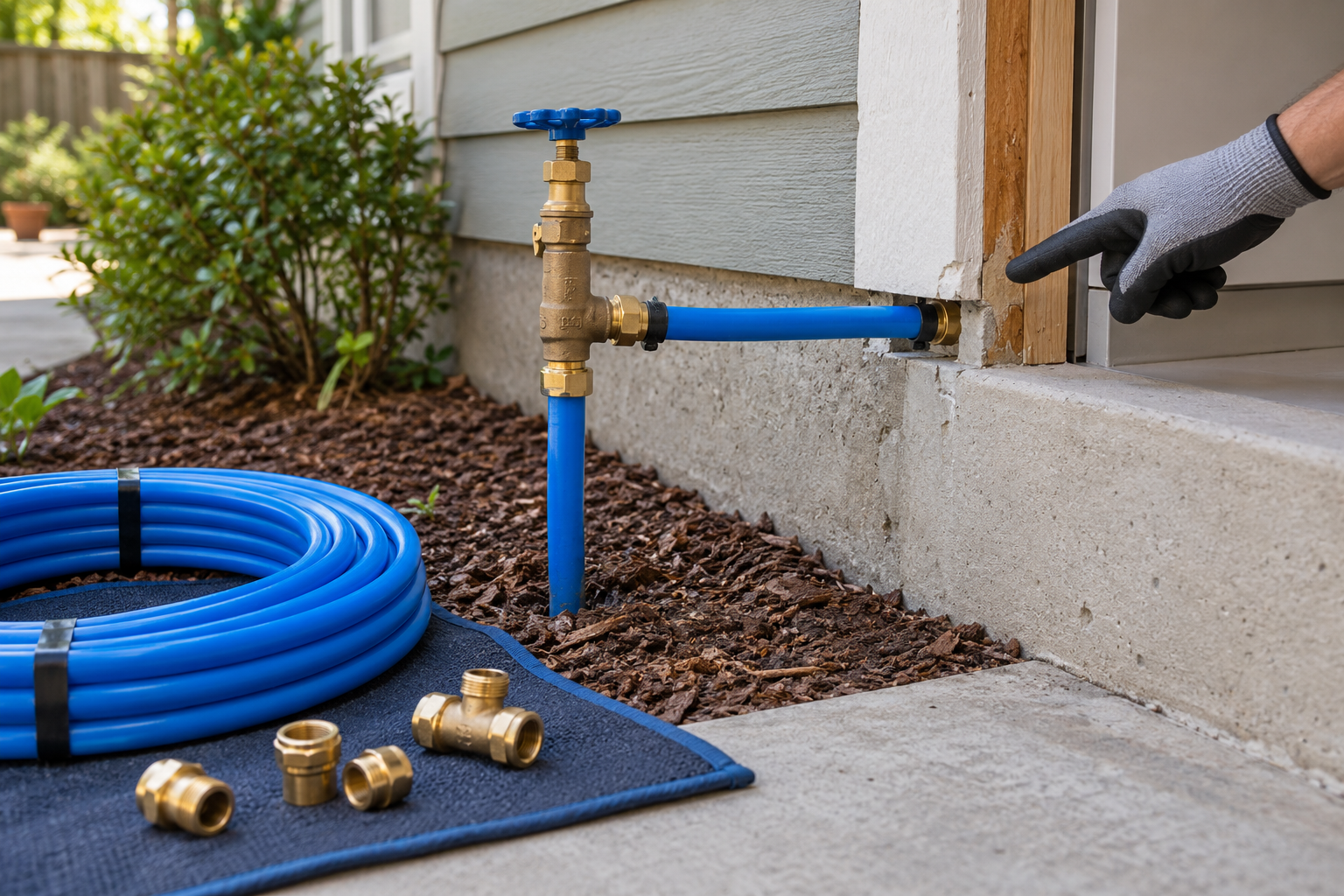
If the pattern points toward the supply pipe between the meter and the home, the next step may involve professional water line repair and installation. The line should be located and tested before anyone assumes that replacement is necessary.
Know When to Stop Testing
Stop the meter test and focus on safety when the meter changes rapidly, water is actively spreading, a ceiling is sagging, the ground appears unstable, or water is near electrical equipment. Keep children and pets away from the area. Do not enter standing water where electricity may be present, touch wet electrical controls, or handle hot discharge water.
A known customer-side shutoff may help limit damage if it is dry, accessible, clearly identified, and operates normally. Never force a corroded or stuck valve, and do not operate a utility-owned curb stop. Contact the appropriate utility or emergency service for hazards involving the public system, electricity, gas odor, fire, or immediate structural danger.
A meter that moves slowly without visible damage still deserves follow-up. Concealed water can travel away from its source, and waiting for a stain or puddle may allow avoidable damage to develop.
What Professional Leak Isolation May Include
A plumber providing water leak detection and repair begins by reproducing the meter result under controlled conditions and confirming every known water use. The next steps depend on the property and the pattern of flow. They may include checking toilets and appliance supplies, isolating customer-side branches with verified valves, observing pressure behavior, inspecting accessible piping, and evaluating the service line.
When appropriate, acoustic or electronic listening equipment, moisture readings, thermal imaging, or other diagnostic methods may help narrow the search. No single tool finds every type of leak, and an instrument reading should be compared with the plumbing layout and physical evidence.
The goal is to separate a fixture or equipment issue from an indoor supply leak, irrigation loss, or underground water-line problem. Once the source and affected section are reasonably confirmed, the plumber can explain repair options and what access may be required. If the evidence points to the meter or the utility side of the system, the water utility should determine the next step.
Frequently Asked Questions
Is a Small Moving Triangle or Flashing Symbol Always Proof of a Leak?
No. It usually indicates flow or a meter-defined usage condition, but meter symbols vary. Confirm that every water use is off and compare complete readings over a controlled period. A symbol alone cannot locate the source.
Can a Toilet Leak Even When I Cannot Hear It Running?
Yes. A worn flapper or seal can let water pass quietly into the bowl. The fill valve may run only occasionally, which makes the leak easy to miss. Test every toilet, not just the one used most often.
How Long Should I Watch the Water Meter?
A continuous or larger flow may appear within minutes. For a smaller suspected loss, keep all water off and compare readings after a longer period—up to about two hours when practical. Record the exact start and finish times so the result can be repeated.
Can Irrigation Move the Meter When the Controller Says It Is Off?
Yes. A valve may seep, a second program may be scheduled, or an auto-fill or outdoor connection may be using water. The controller setting alone does not confirm that every outdoor valve is closed.
Could the Water Meter Itself Be Wrong?
Meter or communication issues are possible, but first repeat the no-use test and account for automatic water use. If the physical reading, flow symbol, and utility data remain inconsistent, contact the utility. Do not tamper with the meter.
Should I Close the Main Shutoff to Locate the Leak?
Only use a clearly identified customer-side valve if you know it is safe and it operates normally. Do not force an old valve or operate utility equipment. A plumber can use verified isolation valves to distinguish sections of the system without creating another problem.
Get the Unexpected Flow Isolated
If the meter keeps moving after two careful no-use tests, the next useful step is to locate the flow—not guess at a repair. For professional leak detection in Roseville, Dependable Rooter & Plumbing can evaluate the meter pattern, rule out common hidden water uses, and isolate the affected part of the plumbing system.
Contact Dependable Rooter & Plumbing to request an inspection and explain what you observed, including the meter readings, test times, appliance or irrigation schedules, and any visible moisture.