A plumber may need to clear part of a blocked drain or sewer line before completing a camera inspection because a solid obstruction can stop the camera head, while backed-up wastewater and loose debris can hide the pipe walls. Limited clearing creates a safer path and a more useful view. It does not replace the inspection or prove that the pipe itself is sound.
Clearing first is not a universal rule. When the line is open enough, a plumber may send the camera in before cleaning to locate the obstruction and assess the pipe. When the camera cannot travel or cannot produce a readable view, the practical sequence may be an initial attempt, limited clearing, and then a complete video inspection in Sacramento.
A Camera Needs Both Access and Visibility
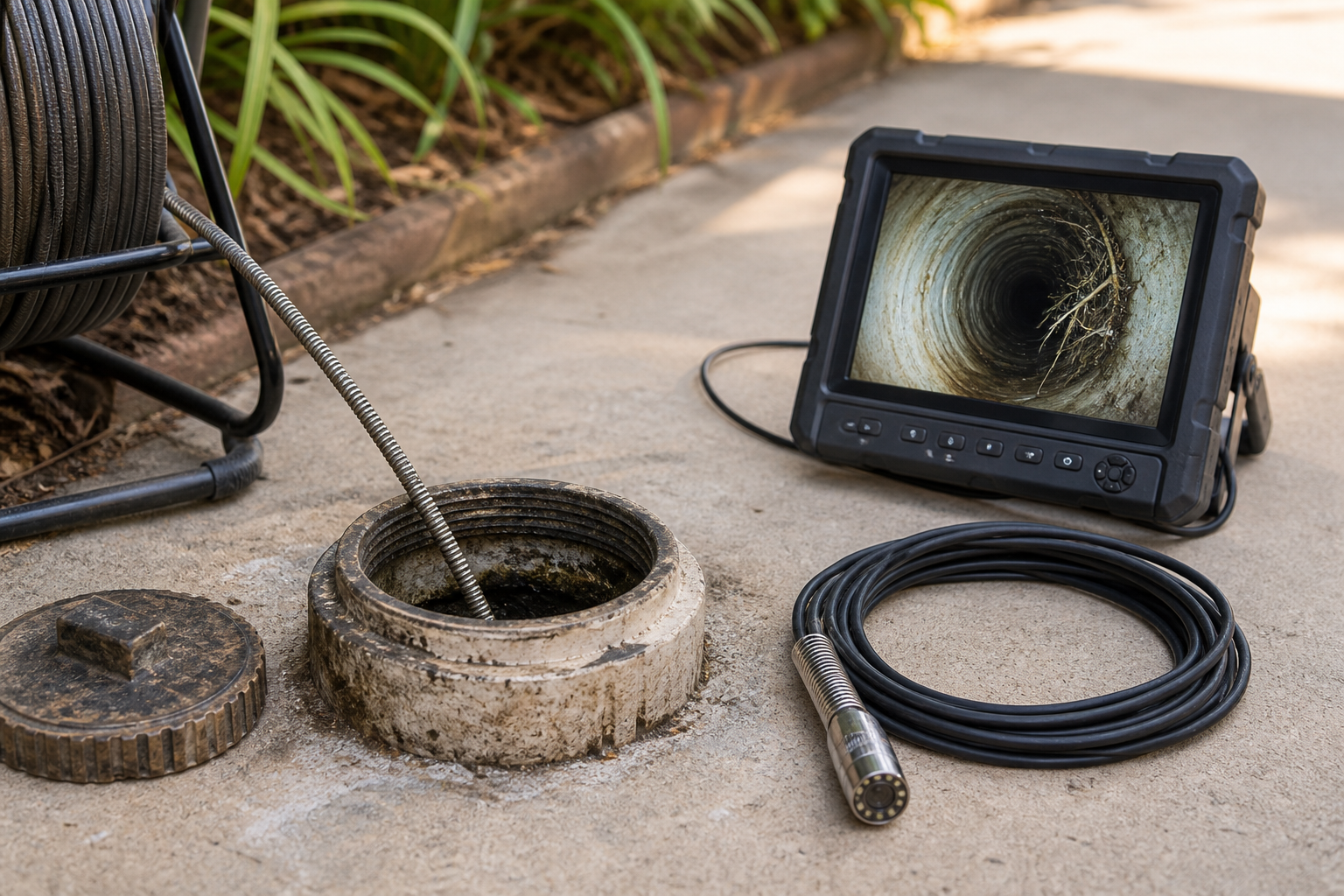
A sewer camera is attached to a flexible push cable. The technician feeds the camera through an appropriate cleanout or another suitable access point while watching the image on a monitor. The camera can show the visible interior of the pipe, but it cannot see through every material or move through every obstruction.
Two different limitations can stop a useful inspection:
- **Travel is blocked.** A dense mass of roots, grease, wipes, scale, or other material may leave no opening large enough for the camera head and cable.
- **The view is obscured.** Turbid wastewater, suspended debris, grease, or material coating the lens can prevent the technician from seeing the pipe wall clearly.
The camera may still reveal where the accessible portion ends. That is useful information, but it is not a complete inspection of the line beyond the blockage. Pushing harder is not a responsible substitute for opening a path. Excess force can wedge the camera, damage equipment, or disturb a fragile pipe without improving the diagnosis.
An Initial Camera Attempt May Still Come First
When access and flow conditions allow it, an initial camera pass can help a plumber determine where an obstruction begins and what the visible pipe looks like on the approach. That information may influence whether a mechanical cable, rooter equipment, or another cleaning method is appropriate.
An initial attempt can also show that the line is too full or too restricted for the camera to continue. In that situation, withdrawing the camera and clearing a path is a diagnostic decision, not a skipped inspection.
The order depends on the actual conditions. A plumber may consider:
- Whether wastewater is draining or standing in the line.
- How far the camera can travel before the image or movement is lost.
- The location and type of available cleanout.
- The pipe’s known material, diameter, age, and condition.
- Whether earlier cleaning or repair work has been performed.
- Whether the symptoms suggest a local fixture blockage or a main sewer problem.
No single sequence is correct for every home. The useful question is whether the camera can safely reach and clearly show the area that needs to be evaluated.
Limited Clearing Is Meant to Open a Diagnostic Path
When a blockage prevents camera travel, the immediate goal may be to restore enough flow and space for the inspection—not to declare the entire problem solved. The plumber selects equipment based on the access, pipe, and suspected material.
A mechanical cable or rooter may create an opening through a stoppage. In other cases, a different cleaning method may be appropriate after the pipe condition is better understood. The work should be controlled because aggressive cleaning in an unknown or deteriorated line can create additional risk.
Once water begins moving and the camera can pass, the technician can inspect the newly exposed section. This follow-up view helps distinguish loose or removable material from a condition built into the pipe itself.
If a Sacramento home has a recurring backup, professional drain cleaning can restore flow, but the camera evidence helps determine why the stoppage developed and whether cleaning alone is a reasonable endpoint.
Clearing a Blockage Does Not Repair the Pipe
A line may drain normally immediately after a path is opened and still have a defect that encourages the next blockage. The remaining problem may be impossible to see until wastewater and debris are out of the way.
A follow-up camera pass may reveal visible conditions such as:
- Roots entering through a joint or damaged area.
- A cracked, broken, or separated pipe section.
- An offset joint that catches paper and debris.
- Corrosion, scale, or a rough interior surface.
- A sag or low area where water and solids collect.
- Grease or other buildup remaining on the pipe wall.
- A foreign object that was moved but not removed.
A camera image must be interpreted in context. It may show the appearance and approximate location of a condition, but it does not automatically establish the pipe’s full structural strength, the exact depth of a crack, or the only acceptable repair. Location equipment, measurements, cleaning results, symptoms, and other tests may be needed before a recommendation is made.
Dirty Water Can Hide More Than a Solid Clog
The camera does not need to hit a solid wall for the inspection to become unreliable. When a sewer line is holding opaque wastewater, the lens may be submerged or covered with debris. The monitor can show movement, bubbles, or a dark field without showing the pipe wall well enough to evaluate it.
That limited image should not be treated as proof that the pipe is clear or undamaged. Restoring drainage may lower the water level and allow the camera to capture the interior surface. The technician may also need to withdraw and clean the lens before continuing.
Flow conditions can change during service. A line that appears open for a few feet may fill again when water reaches a downstream restriction. Watching how the line drains before and after limited clearing gives the plumber more information than a single frozen image.
Access Point and Pipe Layout Affect the Sequence
The cleanout used for entry influences how much of the line can be inspected. A correctly placed main cleanout may provide a more direct route than a fixture opening. Bends, branch connections, diameter changes, and long runs can limit how the push cable travels even when there is no clog.
Before feeding equipment into the line, a plumber may need to identify:
- Which cleanout serves the affected fixtures.
- Whether the opening allows the camera to travel toward the street, the house, or both.
- Whether a backwater valve, trap, or tight fitting blocks the route.
- Whether the cap and cleanout body are safe to open.
- Whether sewage is under pressure behind the cap.
Homeowners should not remove an unfamiliar sewer cleanout cap during an active backup. Wastewater can be under pressure and may spill when the cap is loosened. Keep people and pets away from contaminated water, avoid contact with wet electrical equipment, and arrange professional help if sewage is present.
What a Camera Inspection After Clearing Can Confirm
The follow-up inspection should answer more than whether the camera can now pass. The technician can compare the cleared area with the upstream and downstream pipe, observe remaining material, and document where visible defects appear.
Useful findings may include:
- The distance from the access point to the affected section.
- Whether the pipe is open continuously through the inspected run.
- Whether roots or buildup remain after clearing.
- Whether a joint, crack, offset, or low area is visible.
- Whether another branch joins near the problem.
- Whether the pipe material or diameter changes.
- Whether additional cleaning is needed before the condition can be judged.
The plumber can then explain whether monitoring, more complete cleaning, targeted sewer repair in Sacramento, or another investigation is appropriate. A recommendation should connect to visible conditions and recurring symptoms rather than the fact that a camera was used.
Why Recurring Backups Need More Than Temporary Flow
Opening a narrow path can make a drain appear fixed because wastewater moves again. If the same fixtures slow down or back up repeatedly, the line may still have material on its walls or a physical defect that catches debris.
Tell the plumber if any of these patterns are present:
- Several drains slow or gurgle at the same time.
- A toilet flush causes water to rise in a tub or shower.
- The backup returns soon after previous clearing.
- Large trees are near the sewer route.
- The home has older drain or sewer piping.
- The yard has an unexplained wet, sunken, or unusually green area.
- Sewer odor appears with slow drainage or wastewater.
These signs do not prove that a pipe is broken or that roots are present. They help the technician choose the access point, reproduce the symptom safely, and decide how much of the line needs to be viewed.
What to Expect During the Service Sequence
A condition-based inspection and clearing visit may proceed in several stages.
Confirm the affected fixtures
The technician asks which drains are involved, when the problem began, and whether another fixture changes the symptom. This separates a single-fixture issue from a branch or main-line condition.
Locate a suitable access point
The plumber identifies a cleanout or other approved entry that provides useful access without unnecessary disassembly. The area is protected against wastewater and equipment movement.
Check flow and attempt an initial view when practical
If conditions allow, the camera can document the accessible pipe and show where travel or visibility stops. If backed-up water or a solid mass makes that attempt unhelpful, the camera is withdrawn.
Clear only as conditions require
The plumber uses suitable equipment to restore enough flow and passage for diagnosis. The method depends on the pipe and obstruction; it should not be chosen solely because one machine is available.
Complete the camera pass
The exposed pipe is inspected through the relevant run. Visible defects, remaining buildup, branches, and location are documented as the equipment and access allow.
Explain the evidence and next options
The technician distinguishes what was removed from what remains. The homeowner can then decide whether the line needs additional cleaning, repair evaluation, monitoring, or no further action at that time.
Avoid DIY Steps That Can Reduce Safety or Evidence
Do not mix chemical drain products or add another cleaner when the product already in the line is unknown. Caustic, acidic, bleach-based, and other chemicals can react, produce hazardous heat or fumes, injure anyone opening the drain, and damage some piping or finishes.
Do not force a rented camera or cable through resistance. Consumer equipment can become lodged, and a small camera does not make an unsafe cleanout safe to open. Avoid pressure devices that may push wastewater from another fixture or stress a weak connection.
If you have used a chemical product, tell the plumber the product name, amount, and approximate time. Also report earlier cable cleaning, hydro-jetting, camera work, or sewer repairs. Those details affect protective measures and equipment choices.
Frequently Asked Questions
Should a Sewer Camera Always Be Used Before Drain Cleaning?
No single order works for every blockage. A camera may go first when it can travel and provide a clear image. If a dense obstruction stops the camera or backed-up wastewater hides the pipe, limited clearing may be needed before the complete diagnostic pass.
Does Opening the Drain Mean the Sewer Line Is Fixed?
Not necessarily. Restored flow means water has a path. Roots, offsets, cracks, corrosion, heavy wall buildup, or another defect may remain. A follow-up camera inspection helps determine whether the cleared material was the whole problem or a symptom of a pipe condition.
Can a Camera See Through Standing Wastewater?
It may show only a limited or unclear image when the lens is submerged in dirty water or covered with debris. Lowering the water level and cleaning the lens can make the pipe wall visible. Clear water and pipe layout can still affect what the camera shows.
Will a Sewer Camera Identify Every Leak?
No. A camera can show visible cracks, separations, corrosion, or other interior conditions, but not every leak is visually obvious. The plumber may need location, pressure, moisture, or other evidence depending on the piping and symptom.
Is Hydro-Jetting Always the Next Step After a Camera Is Blocked?
No. The appropriate clearing method depends on the pipe material and condition, access, suspected obstruction, and safety concerns. A mechanical cable, another cleaning method, or further evaluation may be more suitable. Hydro-jetting should be selected for the actual line rather than treated as an automatic response.
Can the Camera Show Exactly Where the Problem Is?
Many camera systems can be paired with locating equipment to estimate the position and depth of the camera head. Accuracy depends on the equipment, access, site conditions, and pipe route. The location should be confirmed before excavation or repair work is planned.
Get a Usable Sewer-Line Diagnosis in Sacramento
When a camera cannot pass or the monitor cannot show the pipe wall, limited clearing may be necessary before the inspection can be completed. The important step is to inspect again after access and visibility improve, then separate removable blockage from any remaining pipe defect.
Contact Dependable Rooter & Plumbing at (916) 238-5848 and describe which fixtures are affected, whether wastewater is standing, how often the blockage returns, and what cleaning or camera work has already been attempted. The technician can choose a suitable access point, restore diagnostic access when necessary, and explain what the completed inspection shows.