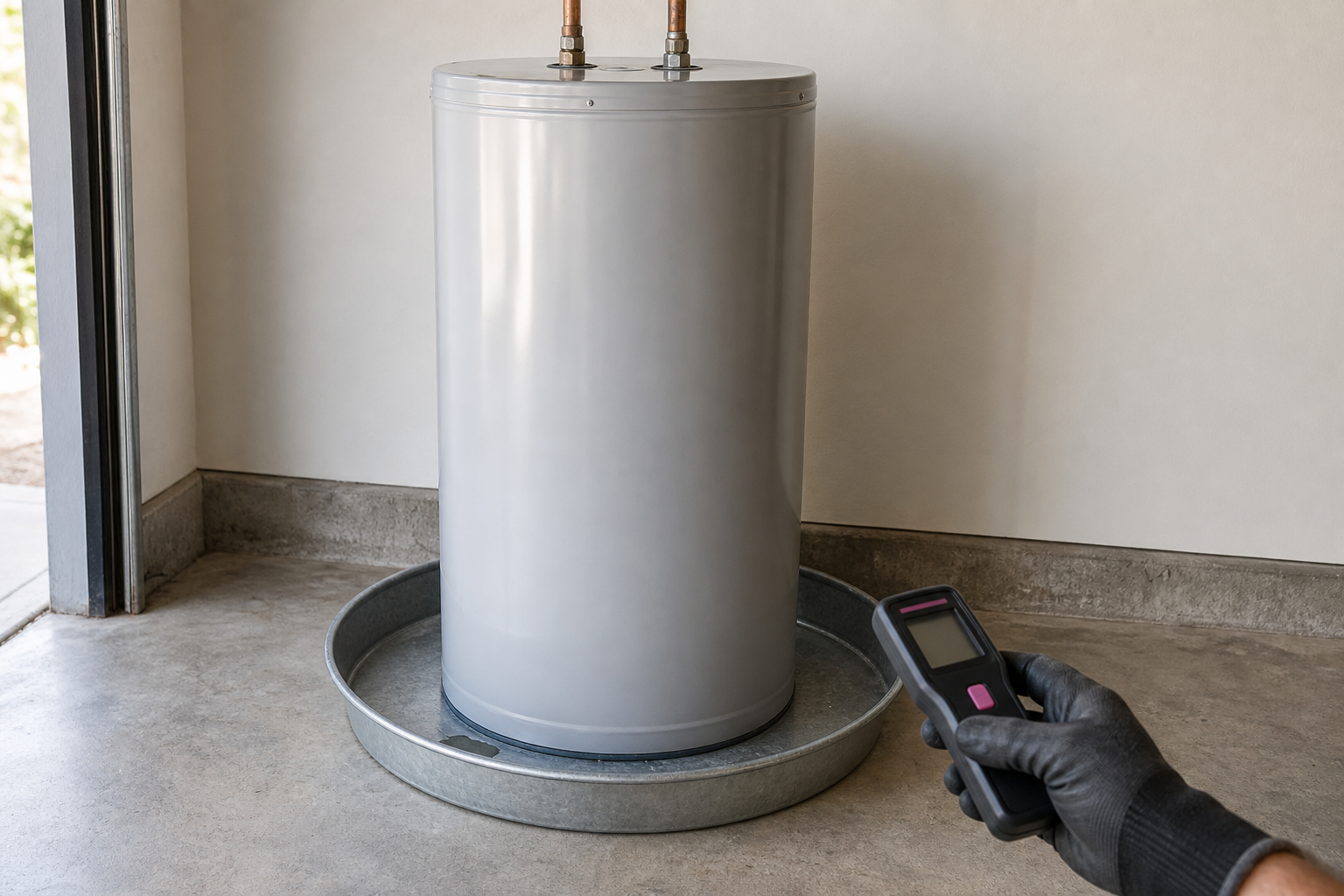
Water in the drain pan means moisture has reached the bottom of your storage water heater, but the pan alone does not reveal where it came from. The source could be a loose water connection, a seeping drain valve, discharge from the temperature-and-pressure relief system, a condensation problem, or a leak in the tank itself.
Do not assume the heater must be replaced, but do not ignore the water either. A drain pan can limit damage from a small leak for a short time. It cannot safely contain a continuing leak, and it may overflow if its drain line is blocked, disconnected, or unable to carry water away.
Keep the Area Safe Before Looking for the Source
Water and water-heater equipment can create electrical, burn, or gas hazards. Keep children and pets away from the area. Do not step into standing water or touch the heater if moisture is near an outlet, wiring, access panel, gas control, or other powered component.
If water is spreading quickly, stop using hot water and contact a qualified plumber. Shut off the home’s main water supply only if you already know where the valve is, can reach it without crossing water, and can operate it without forcing a stuck or corroded handle. Do not experiment with heater controls or open a service panel while the area is wet.
If you smell gas, hear gas escaping, or see steam or scalding water, leave the area. Contact the gas utility or emergency services from a safe location when gas may be involved. Do not try to relight a burner, reset the heater, or investigate a hot discharge yourself.
When the area is safe, take photos of the pan, the water level, and any visible drip trail. Note when you first found the water and whether the pan is filling, staying at the same level, or drying. Those details can help a technician reproduce the problem.
Water Can Travel Down From the Top Connections
A leak near the top of a water heater can run down the outer jacket and collect in the pan, making the bottom of the tank appear to be the source. The cold-water inlet, hot-water outlet, flexible connectors, shutoff valve, unions, and nearby fittings can all develop seepage.
Look from a safe distance for beads of water, mineral residue, staining, or a narrow wet trail beneath a connection. Do not put your hand on a pipe to decide whether it is leaking; hot-water piping can cause a burn. Avoid tightening a fitting without knowing its condition because moving one connection can stress another part of the installation.
An external connection may be repairable, but the correct repair depends on the exact fitting, pipe material, corrosion, and access. Drying the pan without correcting the connection only hides the symptom until more water collects.
The Relief System May Be Discharging Water
Storage water heaters have a temperature-and-pressure relief valve designed to release water if temperature or pressure reaches an unsafe level. The valve normally connects to a discharge pipe. Water from that pipe may reach the drain pan directly or may splash and travel toward it, depending on the installation.
Relief discharge can have several possible causes. Excessive water pressure, thermal expansion in a closed plumbing system, an overheating condition, debris in the valve, or a worn valve can all require investigation. The presence of water does not identify which condition is responsible.
Never cap, plug, clamp, or block a relief valve or its discharge pipe. Do not repeatedly lift the valve lever as a test. A technician can check water pressure, heater temperature, expansion control, the valve, and the discharge route while preserving the safety function.
A Drain Valve Can Seep Into the Pan
The drain valve is located near the bottom of a conventional tank. It is used when the heater must be drained or serviced. A worn seal, damaged threads, loose cap, mineral debris, or a valve that did not close fully after prior service may allow a slow drip.
Drain-valve seepage often leaves a wet area or mineral trail directly below the valve. Even a small recurring drip can keep the pan wet and damage nearby flooring over time.
Do not force the valve open or closed to see what happens. Older plastic or corroded valves can break when disturbed, turning a small seep into a larger leak. A plumber can determine whether the valve can be serviced or replaced and whether the tank is stable enough for that work.
Condensation Can Reach the Pan
Condensation is another possibility, but it should not be used as a quick explanation for every wet pan. A gas storage heater may develop temporary condensation under certain operating conditions, especially while heating a large volume of cold incoming water. A heat-pump water heater also produces condensate as part of normal operation, but that moisture should travel through its intended condensate drain.
Persistent water in the pan may point to a blocked, disconnected, poorly routed, or overflowing condensate line. On a gas unit, continuing moisture can also require a review of combustion and venting conditions. Those systems should be inspected by a qualified technician rather than adjusted by a homeowner.
The timing can provide a clue. Note whether water appears only during a long recovery cycle, after heavy hot-water use, or regardless of whether the heater has been running. A clue narrows the inspection; it does not confirm the cause.
The Storage Tank Itself May Be Leaking
Water appearing around the lower jacket, base seam, or underneath the tank can indicate leakage from the internal tank. Internal corrosion or a failed tank seam may allow water to move through insulation before it reaches the pan, so the visible point may not be the original leak location.
A confirmed tank leak is different from a loose external connection. The pressure vessel is not a component that should be patched as a routine repair. When the tank shell has failed, replacement is generally the safe direction to discuss.
The plumber still needs to verify the source before recommending replacement. Water from a top connection, relief pipe, drain valve, or condensate system can imitate a bottom leak after traveling down the jacket. A careful top-to-bottom inspection helps avoid replacing a heater for an external problem or attempting a minor repair on a failed tank.
The Leak Pattern Helps Narrow the Inspection
Useful observations include how much water is present, how quickly it returns after the pan is dried by a professional, and what the household was doing when the water appeared. A few drops after a heating cycle differ from a pan that steadily fills while no hot water is being used.
Tell the technician if the condition follows showers, laundry, dishwasher use, overnight inactivity, or a recent service visit. Mention changes in hot-water temperature, pressure, noises, rusty water, error indicators, or frequent burner or element cycling. Each detail can help, but one symptom should not be treated as proof of a particular failure.
Also check whether water could be entering from equipment nearby. An air-conditioning condensate line, washing-machine hose, softener, overhead pipe, roof leak, or another plumbing fixture can send water toward the heater. The drain pan may simply be the lowest place where that water becomes visible.
Can the Water Heater Be Repaired?
Some sources can be repaired without replacing the heater. A technician may be able to correct an external supply connection, replace a suitable drain valve, address a relief-valve or pressure-control problem, or restore a condensate drain. The right option depends on the confirmed source and the condition of the surrounding equipment.
Replacement may be appropriate when the internal tank is leaking, corrosion is extensive, or the heater has other serious condition problems. Age matters, but age alone does not diagnose the leak. Repair history, tank condition, energy source, venting, electrical service, installation requirements, and the household’s hot-water needs all affect the decision.
Ask the plumber to show where the water begins, not only where it ends up. A clear explanation should identify the failed or leaking component, the test or observation that confirmed it, whether the condition can be repaired safely, and what risks remain if service is postponed.
What a Professional Water-Heater Inspection May Include
A systematic inspection usually starts above the tank and follows moisture downward. The plumber may examine the supply shutoff, connectors, unions, hot and cold piping, tank jacket, drain valve, relief valve, discharge pipe, drain pan, and pan drain.
Depending on the heater type and symptoms, the technician may also measure static and operating water pressure, review thermal-expansion control, verify temperature operation, inspect the heat-pump condensate path, or evaluate gas venting and combustion. Testing should match the equipment rather than assume every heater has the same controls.
The surrounding floor, wall, platform, and framing may need moisture evaluation when the pan has overflowed or remained wet. Plumbing repair stops the water source; it does not automatically dry damaged building materials. Prompt attention can reduce the area that needs drying or restoration.
Do Not Let a Small Pan Leak Become Property Damage
A shallow drain pan is a backup measure, not a storage reservoir. If water remains in it, schedule diagnosis instead of waiting for the level to rise. Avoid placing objects in the pan, plugging its drain, or using sealant around the heater to trap water.
Continue watching the area from a safe distance until help arrives. If the water level increases, water reaches electrical or gas components, the heater stops operating normally, or the leak spreads beyond the pan, stop using the equipment and keep clear.
Get the Water Source Checked Before the Pan Overflows
Dependable Rooter & Plumbing can inspect a wet water-heater drain pan, trace the moisture to its source, and explain whether the appropriate next step is a connection repair, valve or pressure correction, condensate service, or water-heater replacement.
Call (916) 238-5848 to request water heater diagnosis in the Sacramento area. Share when the water appeared, whether the pan is still filling, and any photos or changes in heater operation so the technician can arrive with useful context.